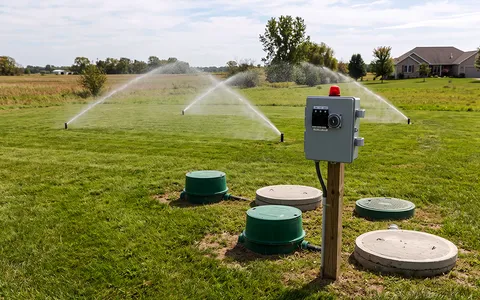
An aerobic or pump-system alarm going off usually means the tank water is too high or the air pump has failed. It is generally not an immediate emergency, but you should ease off water use and have the system serviced soon. In East Tennessee many properties run these systems because the ground would not support a plain gravity drain field, so the pump doing that extra work is worth protecting.
What the red light and alarm mean
An aerobic or advanced treatment system runs on a control panel that watches the tank water level and the air pump. When something is off, it lights a red warning and sounds an alarm so you catch the problem before it turns into a backup. The usual triggers:
- High water. The level in the tank rose past the float, usually because the discharge or spray pump is not moving water out, or too much came in at once.
- Air pump failure. The aerator that keeps the system treating has quit. Many panels flag this on its own, and you will often notice the steady hum is gone.
- Power or breaker trip. A tripped breaker or an unplugged pump can set the alarm off.
Why so many East Tennessee systems have a pump and an alarm
This is the part that is different here. A plain gravity septic system has no pump and no alarm; it just drains downhill into the field. Plenty of properties around Knoxville and through the Smokies foothills cannot use that simple setup. Out in the Valley and Ridge the soil over the limestone is thin and uneven, the residual clay percolates slowly, and many lots sit on a real slope. Where the county soil and site evaluation shows the ground will not support a conventional gravity drain field, the permit calls for an advanced treatment or pump system instead. That system is what has the control panel, the float, and the alarm now getting your attention. In Knox County the evaluation runs through the Health Department’s groundwater protection office; in Sevier County it runs through Environmental Health.
So the alarm is not a sign the system was a mistake. It is the system doing the extra work this ground demands, and letting you know when a part of it needs a look.
A wet winter adds to it. When a rainy stretch raises the water table, groundwater can work into the system and the pump has to run harder and more often to keep the level down, so alarms tend to show up more in the wet season than in a dry summer.
What to check right now
- Silence the alarm. Most panels have a mute or silence button. The red light staying on afterward is normal.
- Check the breaker. Look for a tripped breaker or GFCI on the septic circuit and reset it one time.
- Listen for the air pump. A silent aerator when it should be humming points to a failed pump.
- Ease off the water. Hold off on laundry, long showers, and the dishwasher until it is checked. That matters more on a busy cabin weekend, when the load is already high.
Do I need to call right now?
Usually not. The alarm is an early warning, not a backup, so you have time to schedule service rather than treat it as a 2am emergency. Call right away if the alarm comes with sewage backing up indoors, water pooling in the yard, or a strong sewage smell, or if the breaker trips again the moment you reset it. Otherwise, book aerobic alarm repair and we will find the cause and fix it.
What not to do
- Do not keep resetting a breaker that trips again. Something is pulling too much current.
- Do not leave a silenced alarm for weeks. The light is on for a reason, and on these systems a stalled pump means the treatment stops.
- Do not open the tank yourself. Aerobic and advanced tanks hold dangerous gases.
Want to understand how these systems work? Read what is an aerobic septic system, or see our aerobic system service.
Aerobic Septic Alarm Repair in Knoxville, TN
Same-day diagnosis and repair when your aerobic alarm or red light comes on.